How Fog Harvesting Works: Could Britain Collect Water from Mist?
Fog nets can pull drinking water out of thin air, but does damp Britain have anything to gain? How the...

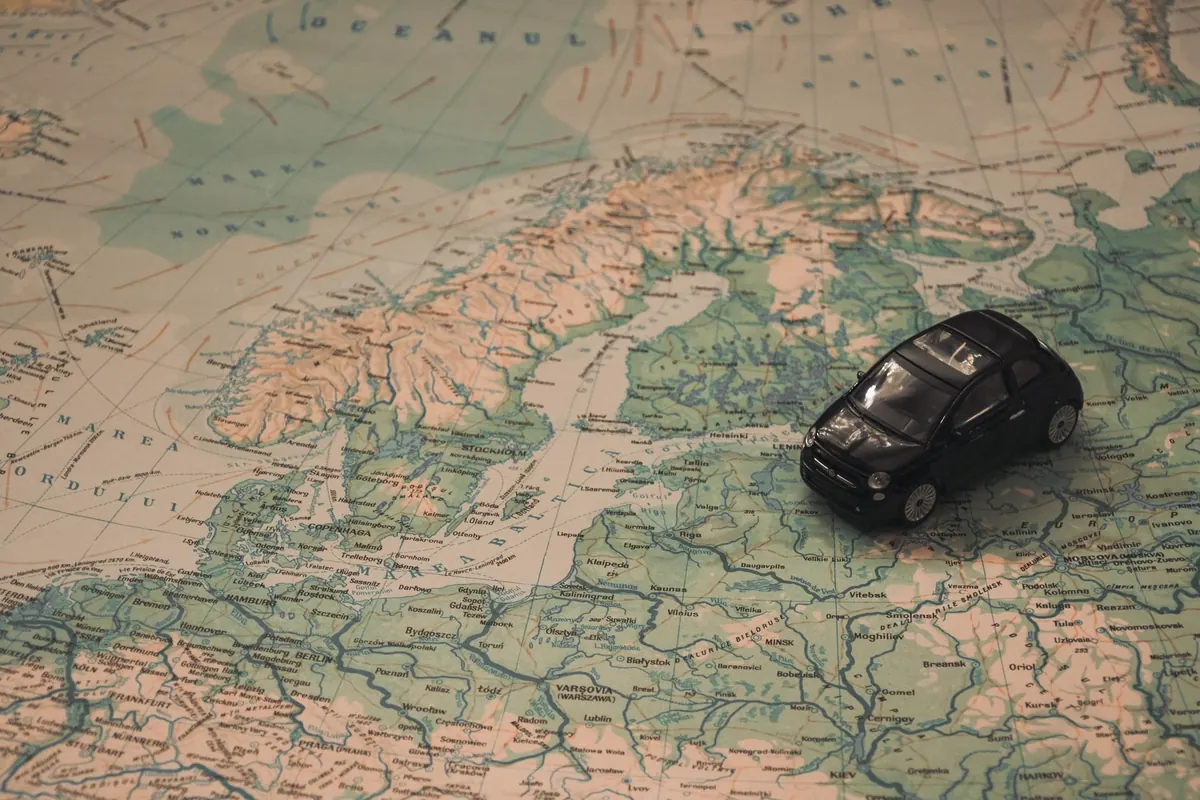
Fog is the quietest hazard on the road. No spray, no drumming rain, no warning — just a grey wall where the road dips into a valley or climbs onto a moor, and a set of tail lights that disappears sooner than you expect. The good news is that fog is also one of the most predictable things in British weather. It forms in the same places, at roughly the same hours, for reasons you can check before you leave the house. An hour of planning can turn a nervy drive into an ordinary one.
Most route planning starts with a glance at the temperature and a vague idea of whether it will rain. That tells you almost nothing about fog. Open a forecast and look for the words themselves: mist, fog, fog patches, dense fog patches, freezing fog. Broadly speaking, forecasters reach for "mist" when visibility stays above a kilometre and "fog" when it drops below, with "dense fog" kept for the thickest conditions.
If you see "freezing fog", pay extra attention. The same conditions that trap moisture near the ground can leave a thin film of ice on bridges, slip roads and anywhere the road surface is a degree or two colder than the land around it.
Then look at the hourly detail. Some forecasts give a visibility figure in metres alongside wind speed and temperature, and that line is worth more to a driver than the headline summary. Calm air, a small gap between air temperature and dew point, and a clear night is the recipe for radiation fog — it is the combination, not any single number, that matters. Weather reports for an airport near your route are another useful check, because they quote visibility in metres and update hourly.
Fog does not spread evenly across a county. It pools. Cold, still air drains downhill and collects in the lowest ground, which is why the same valleys, floodplains and moorland edges turn up in fog reports year after year. If your route runs through the Somerset Levels, the Fens, the Vale of York, the Trent or Ouse valleys, the Cheshire plain, the Midland motorway network or the higher passes of the Pennines, the Lake District and the Scottish Highlands, assume you may meet it.
Coastal fog is a different animal. A haar on the east coast can roll in off the North Sea on a bright afternoon, sit for two or three days and then vanish as suddenly as it came. On the west, sea fog tends to arrive with warm, moist air moving over cooler water. The practical point is the same either way: your fog risk is not uniform across a 300-mile drive. It is concentrated in perhaps three or four stretches, and knowing roughly where they are lets you plan stops and timings around them.
Radiation fog has a daily rhythm. It forms overnight as the ground cools and the air just above it reaches its dew point, thickens through the small hours, and is usually at its worst around dawn. On a winter morning it often lifts or thins by mid-morning as the sun gets to work — but on the shortest days it can sit in a valley until early afternoon, or never clear at all.
Work out what your journey looks like at a 40mph average rather than 60 or 70. That is roughly what sustained poor visibility does to a long drive, and it is better to do the arithmetic at the kitchen table than halfway up a moorland A-road. If the slower figure makes the trip unrealistic, the trip needs changing — not the driving.
Then choose a Plan B. Motorways are often the safest place to be in fog: traffic is separated, there are no junctions onto blind side roads and no pedestrians. They are also the easiest place to be trapped when a collision closes a junction. Knowing a parallel A-road, and roughly how much time the detour adds, means you make that call calmly rather than at the back of a long queue. Note two or three places where you could stop — motorway services, a supermarket car park, a village café — and roughly how far apart they are.
Dipped headlights, not full beam, which bounces off the fog and makes things worse. Use fog lights only when visibility is seriously reduced — the Highway Code puts that at roughly 100 metres — and switch them off as soon as it improves, because a rear fog light left on is a glare hazard to the driver behind. Follow the left-hand line or the kerb rather than the tail lights ahead, leave a much larger gap than feels natural, drop the windows at junctions to listen, and avoid overtaking unless you can see far enough to be certain. If you find yourself gripping the wheel and guessing, that is the signal to stop somewhere safe — a service area or a car park, never the hard shoulder.
The purpose of all this preparation is not to guarantee a clear run. It is to make stopping easy when stopping is the right answer. Rescheduling a trip costs an afternoon, or a night somewhere unplanned. Pressing on when you cannot see costs a great deal more, and not only in money.
So: check the visibility line, not just the temperature. Know which valleys and coasts your route crosses. Pick the hour that suits the fog, not the fog that suits you. Carry a Plan B, and give yourself permission to use it. Fog rewards the driver who thought about it yesterday — and it is entirely happy to punish the one who did not.
Photo: Mihis Alex / Pexels
Fog nets can pull drinking water out of thin air, but does damp Britain have anything to gain? How the...
Why do London's autumn mornings turn misty? Clear nights, the Thames valley, urban particles and still air...
Dew point explains why windscreens mist, grass soaks by dawn and fog swallows the valley — a plain-English...